History of Matcha
From Ancient China to Modern Japan
The Origins of Matcha
Matcha's history begins in 805 AD, when it was introduced to Japan from China. Initially, it gained popularity among aristocrats and samurai, becoming deeply intertwined with Japanese culture during the Kamakura, Muromachi, and Azuchi-Momoyama periods.
Tea's First Arrival in Japan
In 805 AD, Japanese monks Saicho and Kukai traveled to China to study Buddhism. During their journey, they brought tea seeds back to Japan. This marked the first recorded instance of tea in Japan. Historical records suggest that Eitada, a Buddhist monk, served green tea to Emperor Saga, who became so enamored with its taste that he ordered tea plantations to be established around Kyoto.
Eisai and the Introduction of Matcha
In 1187, Buddhist monk Eisai traveled to China to further his studies in Zen Buddhism. At the time, tea in China was primarily consumed as compressed tea—tea leaves compacted into solid blocks, which were broken, ground, or pulverized for brewing. This preparation method inspired the development of matcha.
Eisai recognized tea's benefits in promoting concentration and mindfulness, essential for Zen practices. He brought tea seeds and the concept of powdered tea back to Japan. To promote tea drinking, Eisai authored the book "Kissa Yojoki" (The Record of Drinking Tea), highlighting tea's health benefits and advocating for its widespread cultivation.
Following Eisai's efforts, tea cultivation flourished in regions like Toganoo and Uji in Kyoto, where the climate and soil were ideal for growing high-quality tea. During the Muromachi period, the cultivation of tea was actively encouraged by Shogun Yoshimitsu Ashikaga, solidifying tea's place in Japanese culture.
During the Muromachi period, tea contests became popular. These contests were games where participants would taste tea and try to guess its origin, a practice that reflected the growing sophistication and appreciation of tea culture in Japan.

The Establishment of the Japanese Tea Ceremony
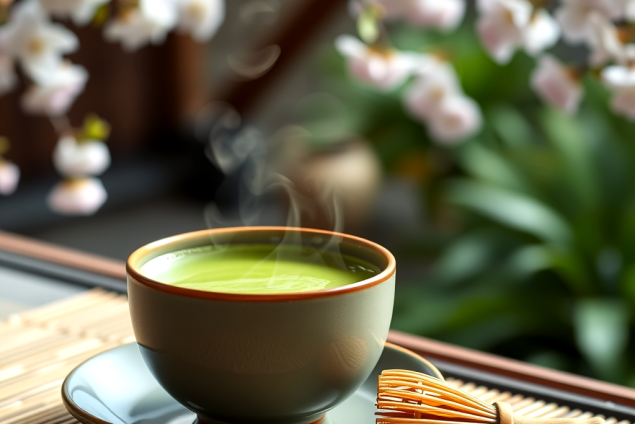
By the 15th century, the Japanese tea ceremony had been formalized. This practice elevated tea preparation and consumption into an art form, blending spirituality, aesthetics, and hospitality. The tea ceremony became widely embraced by not only the nobility but also the samurai class.
Sen no Rikyu, a 16th-century tea master, played a pivotal role in shaping the tea ceremony as we know it today. He introduced the concept of wabicha, emphasizing simplicity, humility, and mindfulness. Wabicha advocated the removal of unnecessary decorations and focused on creating an atmosphere of equality and calmness during tea gatherings.
Sen no Rikyu's philosophy transformed tea into a profound cultural experience. His principles of tea preparation and hospitality continue to influence modern tea culture, preserved by the Omotesenke, Urasenke, and Mushakojisenke schools of te
Sen no Rikyu and Wabicha
Sen no Rikyu's philosophy transformed tea into a profound cultural experience. His principles of tea preparation and hospitality continue to influence modern tea culture, preserved by the Omotesenke, Urasenke, and Mushakojisenke schools of tea.
Legacy of Matcha
Matcha's evolution from a Chinese preparation to a cornerstone of Japanese culture showcases its versatility and enduring appeal. Today, matcha is celebrated not only for its historical significance but also for its health benefits and role in traditional practices like the tea ceremony.