
How to Choose High-Quality Matcha: A Complete Guide
Walk into any health food shop or scroll through an online tea retailer and you will find dozens of matcha options, each claiming to be the finest, the most authentic, the greenest. It can be genuinely overwhelming. But quality matcha has a handful of telltale signs that separate the exceptional from the merely adequate, and once you know what to look for, you will never settle for second best again.
Why Quality Matters More with Matcha
Unlike loose-leaf tea, where you steep and discard the leaves, with matcha you consume the entire leaf in powdered form. This means everything — the farming practices, the growing conditions, the processing method — ends up in your cup. A lower-quality matcha does not just taste worse; it may contain higher levels of caffeine and bitterness without the balance of beneficial compounds that make premium matcha so special.
Colour: Your First Clue
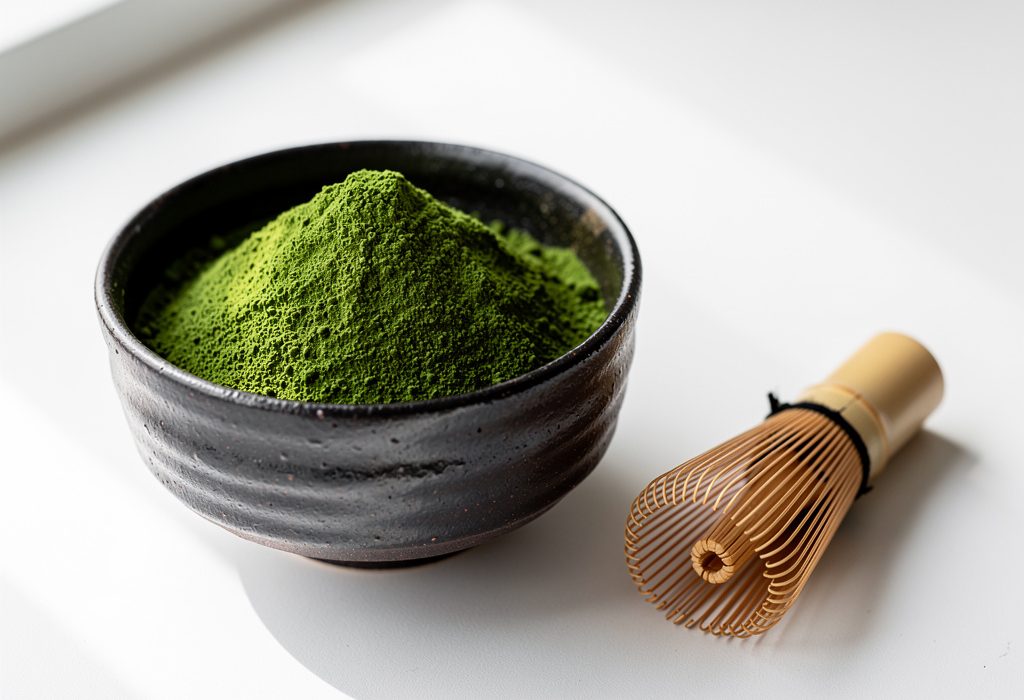
The most immediate indicator of matcha quality is its colour. Exceptional matcha is a vivid, almost electric green — the kind of green that looks almost too bright to be natural. This intense hue comes from chlorophyll, which is concentrated in the tea leaves during the final weeks of growth when the plants are shaded from direct sunlight.
Poor-quality matcha tends to be dull, yellowish, or brownish-green. This happens when older leaves are used, when the shading process is skipped or shortened, or when the matcha has oxidised from improper storage. If you open a tin of matcha and it looks khaki rather than emerald, that is your answer right there.
Understanding the Grade System
You have likely come across the terms ceremonial grade and culinary grade — and while these are not official industry certifications, they offer a useful guide to how matcha is intended to be used.
- Ceremonial grade refers to matcha made from the youngest, most tender tea leaves harvested in the first flush of spring. It is ground to an exceptionally fine powder and is meant to be whisked with hot water and consumed on its own. The flavour should be smooth, slightly sweet, and umami-rich with minimal bitterness.
- Culinary grade includes a broader range of matcha — from mid-tier latte grade products that still taste lovely in milk-based drinks, to lower-tier powders suited for baking and cooking where other flavours dominate. Culinary grade matcha tends to have a more robust, sometimes bitter flavour that pairs well with the sweetness of cakes or the creaminess of a latte.
The mistake many people make is using culinary grade matcha in their daily straight preparation and wondering why it tastes so bitter. Match the grade to your intended use and the experience improves dramatically.
Origin and Growing Region
Japan is the gold standard for matcha production, and within Japan, certain regions have earned reputations for extraordinary quality. Uji, in Kyoto Prefecture, is perhaps the most celebrated — the region’s misty climate, fertile soil, and centuries of tea-growing tradition produce matcha with exceptional depth of flavour. Other notable regions include Nishio in Aichi Prefecture and Yame in Fukuoka.
This does not mean matcha from other regions is automatically inferior. Taiwanese matcha has improved considerably in recent years, and small producers elsewhere are doing excellent work. But if you are looking for a reliable benchmark, Japanese-origin matcha with a stated growing region is a strong starting point.
Texture and Fineness
High-quality matcha is ground on traditional stone mills to an almost impossibly fine powder — typically around 5 to 10 microns per particle. When you run it between your fingers, it should feel silky-smooth, similar to fine talcum powder or high-grade makeup powder.
Coarser matcha does not dissolve as well, tends to clump more, and often produces a grittier texture in the cup. It also tends to taste harsher. If your matcha has a powdery but slightly grainy feel, it has likely been processed using faster, less precise methods.
Taste and Aroma
Once you have assessed the visual and tactile properties, the real test is in the cup. Prepare a simple bowl of matcha — about 1 gram of powder whisked with 70ml of water at around 70 to 80 degrees Celsius — and taste it without any additions.
Premium matcha should greet you with a sweet, grassy aroma that is complex but not harsh. The taste should open with that distinctive umami depth, follow with gentle sweetness, and finish cleanly without lingering bitterness. There will always be some bitterness — that is part of matcha’s character — but in a quality product it is pleasantly balanced rather than overwhelming.
A strong, unpleasant bitterness or an astringent, drying sensation is a sign that older leaves were used or the growing conditions were not optimal.
Packaging and Storage Indicators
Even excellent matcha can be ruined by poor packaging and storage. Matcha is highly susceptible to degradation from light, heat, air, and moisture. Look for these signs of a quality product:
- Airtight, resealable tins or foil pouches rather than thin paper packaging
- A harvest or best-before date — freshness matters enormously with matcha
- Storage recommendations to keep it refrigerated or in a cool, dark place
- Small batch sizes, since a 100g tin will oxidise long before most people finish it
If a brand does not mention harvest date or does not seal their matcha properly, that is a red flag regardless of how the powder looks in the photographs.
Price as a Guide — But Not a Rule
Genuinely high-quality matcha is not cheap to produce. Stone-grinding is slow — a single stone mill can produce only around 30 to 40 grams per hour — and first-flush, shade-grown, hand-picked leaves command premium prices. If you are finding ceremonial grade matcha at very low prices, ask why. Often it is because corners have been cut somewhere in the production chain.
That said, price is not a guarantee of quality. Some matcha is overpriced simply because of clever branding. Use price as one signal among many, not as the definitive measure.
Making the Right Choice for You
Ultimately, choosing high-quality matcha is about understanding what you are looking for and where. If you are preparing traditional matcha to drink plain, invest in ceremonial grade from a reputable Japanese producer. If you are making lattes every morning, a good latte-grade matcha will serve you beautifully at a more accessible price. And if you are baking matcha into cakes or blending it into smoothies, a well-sourced culinary grade is perfectly suited to the task.
Take your time, start with small quantities, and taste widely. Your palate is the best guide you have — and once you have tried truly exceptional matcha, you will know immediately what you have been missing.