
How to Make the Perfect Matcha Latte at Home
The matcha latte has become one of the most popular café drinks of the past decade — and for good reason. When made well, it is creamy, earthy, subtly sweet, and energising without the jitteriness of coffee. The good news is that a genuinely excellent matcha latte is straightforward to make at home, costs a fraction of the café price, and gives you full control over quality and sweetness. Here is everything you need to know.
Start With the Right Matcha
The single biggest variable in a matcha latte is the matcha itself. Culinary grade matcha — the type most commonly sold in budget blends and flavoured products — is made from lower-quality, older leaves. It tends to be yellowy-green rather than vivid emerald, and has a distinctly bitter, grassy taste that can be harsh when diluted with milk.
For a latte you will genuinely enjoy drinking every day, choose a ceremonial grade matcha or a high-quality culinary grade specifically intended for milk-based drinks. The difference is immediately visible: premium matcha is a bright, saturated green that tints the milk a beautiful jade colour rather than a dull khaki. The flavour is smooth, slightly sweet, and umami-rich — no bitterness even without sweetener.
The Matcha Base: Getting It Right Before the Milk
The most common mistake in home matcha lattes is adding milk directly to dry matcha powder. This almost always results in lumps and an uneven, gritty texture. The correct technique is to prepare a concentrated matcha paste or shot first, then add the milk separately.
Sift 1.5 to 2 grams of matcha (roughly one heaped teaspoon) into a matcha bowl or small mug. Add just 30–40ml of hot water at 70–80°C — never boiling, as high heat both destroys the delicate flavour compounds and can make the matcha bitter. Whisk vigorously in a “W” or “M” motion using a bamboo chasen until the matcha is completely dissolved and a fine foam has formed on the surface. This concentrated base is what you build the latte around.
Choosing and Frothing Your Milk
Oat milk has become the near-universal preference for matcha lattes, and with good reason. Its natural sweetness and creamy body complement matcha without overpowering the tea’s flavour, and barista-edition oat milks froth beautifully to a microfoam that rivals dairy. Full-fat oat milk or barista varieties (which contain a small amount of oil or emulsifier) produce the best foam.
Dairy alternatives to consider in order of frothing ability: oat milk, whole cow’s milk, macadamia milk, soy milk (can sometimes split), and almond milk (thinner foam, but pleasant flavour). Avoid coconut milk for frothing unless it is specifically designed for it.
To froth, heat 150–200ml of milk to around 60–65°C — hot enough to drink comfortably but not scalded. Use a handheld milk frother for 20–30 seconds, or steam using a machine’s steam wand. Tilt the container slightly and introduce the frother just below the surface to create microfoam rather than large, airy bubbles.
Assembling the Hot Latte
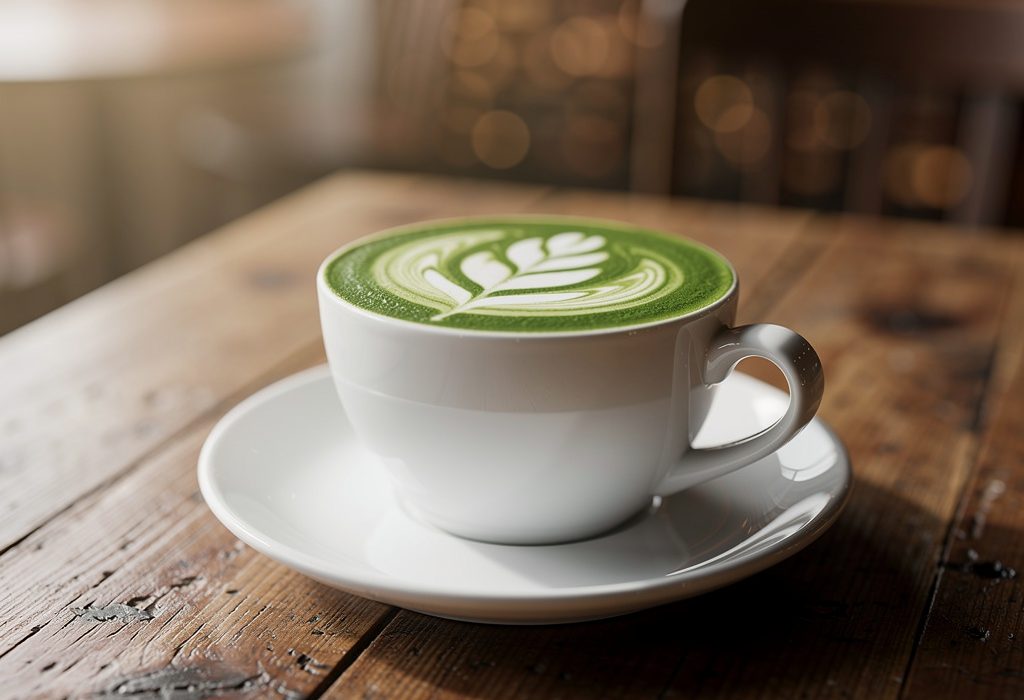
Pour the frothed milk gently over your matcha base, holding back the foam with a spoon at first, then spooning it on top. If you want to add sweetener, honey and maple syrup both pair exceptionally well with matcha — stir them into the warm matcha base before adding milk, using about half a teaspoon to start. Avoid white sugar, which adds sweetness without any complementary flavour.
The ideal ratio is roughly 1.5–2g matcha to 150–180ml milk for a balanced, green-forward drink. Increase the milk for something more subtle and creamy, or increase the matcha for a more intense, tea-forward experience.
The Iced Matcha Latte
The iced version has exploded in popularity and is arguably even easier to make than the hot. Prepare your matcha base as above with warm water, then pour it over a glass filled with ice. Add cold milk (or cold-frothed milk if you have a cold-frother), and stir gently to combine. The contrast of the dark green matcha swirling through white milk as you pour it is genuinely beautiful.
For iced lattes, a touch more sweetener often works well since cold temperatures suppress sweetness perception. A simple matcha syrup — made by dissolving equal parts sugar and water with a teaspoon of matcha over gentle heat — can be prepared in advance and stored in the fridge for a week, making your daily iced latte a thirty-second ritual.
Elevate Your Daily Cup
The quality of your daily matcha latte is directly tied to the quality of your matcha. Explore our ceremonial and latte-grade matcha at true-matcha.com — stone-ground in Japan, shipped fresh, and the foundation of a genuinely great cup every time.