Matcha in the Kitchen: Your Complete Guide to Baking and Cooking with Matcha

Matcha in the Kitchen: Your Complete Guide to Baking and Cooking with Matcha
Matcha has moved well beyond the tea bowl. Today, this vibrant green powder is transforming kitchens everywhere — lending its earthy sweetness, brilliant colour, and extraordinary nutritional profile to everything from chewy mochi and crumbly shortbread cookies to silky tiramisu and morning smoothies. If you have ever wondered how to cook with matcha at home, or which grade works best for baking, this guide walks you through everything you need to know, recipe inspiration included.
Why Matcha Works So Well in Baking and Cooking
Matcha’s natural flavour profile — grassy, slightly sweet, with a clean bitter finish — is a natural partner for rich, fatty ingredients like butter, cream, and chocolate. Where coffee cuts through sweetness, matcha softens and complements it. The powder also brings an unmistakeable visual drama: just one or two teaspoons turn a pale batter into a deep, jewel-toned green that needs zero artificial colouring.
Nutritionally, the benefits do not disappear in the oven. Matcha is loaded with antioxidants called catechins — particularly EGCG — along with L-theanine, chlorophyll, and a modest amount of caffeine. While heat degrades some heat-sensitive nutrients, a meaningful amount survives baking temperatures, meaning your matcha cookies are genuinely doing more for you than a standard biscuit.
One critical point before you start: always use culinary grade matcha for cooking and baking. Culinary grade matcha powder is milled from older tea leaves and has a more robust flavour designed to stand up alongside other strong ingredients. Save your ceremonial grade matcha for whisking in a bowl — it would be wasted (and expensive) in a batter. Look for a vibrant green colour and fine texture; a dull, yellowish powder signals oxidation and a flat, bitter result.
Essential Matcha Baking Tips
A few simple principles will make your matcha baking shine every time.
- Sift your matcha. Matcha powder clumps easily. Always sift it together with your dry ingredients — flour, sugar, baking powder — to ensure an even distribution and no bitter green pockets in the finished bake.
- Start with 1–2 teaspoons per cup of flour. This gives a noticeable but balanced flavour. Scale up to a tablespoon if you want a bold, earthy punch.
- Pair with vanilla or white chocolate. Both ingredients amplify matcha’s natural sweetness without competing with it. Dark chocolate also works beautifully for a more complex, bittersweet profile.
- Store your matcha properly. An opened tin of culinary grade matcha powder should be kept in an airtight container away from light and heat. Oxidation is the enemy of that brilliant colour and fresh flavour.
- Do not overheat. For delicate no-bake recipes like cheesecakes or ice cream, add matcha at the end of mixing to preserve its colour and maximum flavour.
Three Recipes to Start With
Matcha Shortbread Cookies
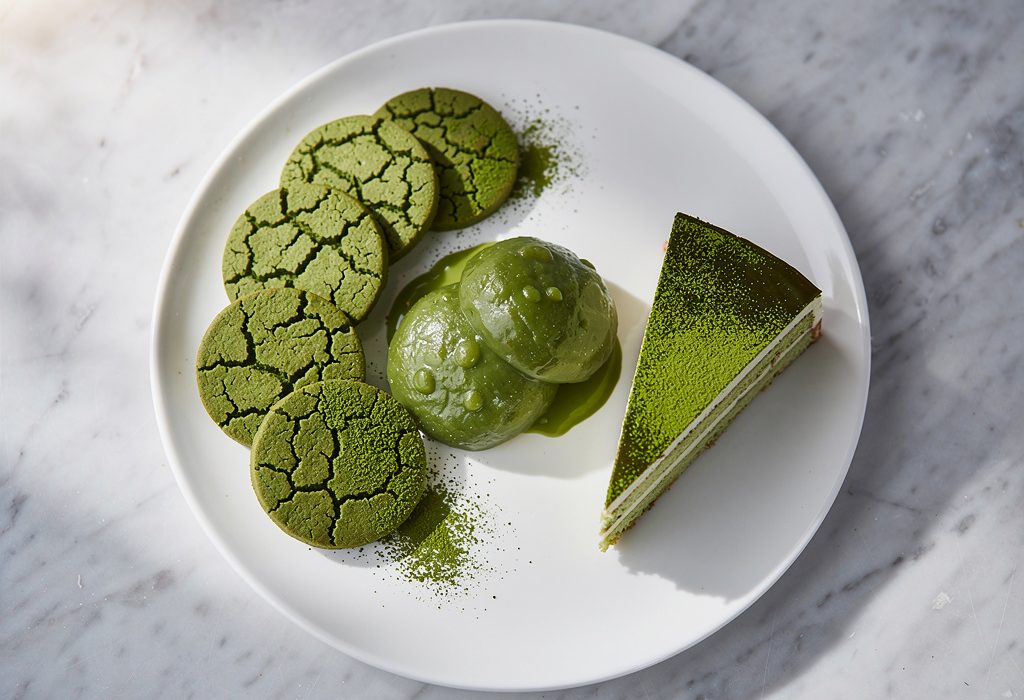
These are the easiest entry point for matcha baking at home. Cream 125 g of softened butter with 60 g of icing sugar until pale, then sift in 160 g of plain flour and 2 teaspoons of culinary grade matcha powder. Bring the dough together, roll it into a log, wrap and refrigerate for 30 minutes, then slice into rounds and bake at 160°C for 14–16 minutes. The result is a crumbly, buttery biscuit with a delicate green hue and a gently earthy finish. Dust lightly with icing sugar before serving.
Matcha Mochi
Mochi is one of the most celebrated matcha desserts in Japanese cuisine, and it is surprisingly simple to make at home. Combine 200 g of glutinous rice flour, 30 g of sugar, 1 tablespoon of culinary grade matcha powder, and 250 ml of water in a microwave-safe bowl. Microwave on high for 2 minutes, stir, then cook for another 90 seconds until the dough is smooth and sticky. Turn onto a surface dusted with cornstarch, portion into small rounds, and fill each with sweet red bean paste or a cube of white chocolate. Dust again with cornstarch and serve at room temperature.
Matcha Tiramisu
This Italian classic gets a Japanese makeover by swapping the espresso soak for a bowl of strong whisked matcha. Whisk 2 teaspoons of best matcha powder into 200 ml of hot water using a bamboo whisk (or a small milk frother), then cool to room temperature. Dip sponge finger biscuits briefly into the matcha liquid and layer them in a dish. Top with a whipped mixture of 250 g mascarpone, 3 tablespoons of icing sugar, 200 ml of double cream, and an extra teaspoon of matcha. Repeat the layers, dust the top with a fine coating of matcha powder, and refrigerate for at least four hours before serving. This dessert has become one of the most shared matcha recipes online — and for good reason.
Matcha in Smoothies and Everyday Drinks
Not every matcha recipe requires an oven. Blended into a morning smoothie, culinary grade matcha powder provides a smooth, sustained energy lift without the jittery spike of a double espresso — thanks to the partnership of caffeine and L-theanine. A simple formula that works: blend one frozen banana, 200 ml of oat milk, 1 teaspoon of matcha powder, a tablespoon of almond butter, and a handful of ice. The result is creamy, naturally sweet, and beautifully green. For a warmer option, a matcha latte — whisked matcha stirred into steamed oat or almond milk with a touch of honey — is endlessly adaptable and ready in under five minutes.
Matcha also works stirred into overnight oats, blended into salad dressings (particularly with miso and sesame), or folded into yoghurt for a vibrant breakfast bowl. Once you start experimenting with cooking with matcha, you will find it integrates naturally into almost every corner of your kitchen.
Discover Premium Matcha for Your Kitchen
The quality of your matcha will make or break every recipe in this guide. A flat, oxidised powder produces dull results; a fresh, vibrantly green culinary grade matcha transforms the same recipe into something genuinely special. At true-matcha.com, we source only the finest Japanese culinary and ceremonial grade matcha, giving you the best matcha powder available for every purpose — whether you are whisking a morning bowl or baking a batch of mochi for the weekend. Explore our range and bring the full depth of Japanese matcha into your kitchen today.