Where Does Matcha Come From? Exploring the Origins of Japan’s Most Treasured Green Tea

Where Does Matcha Come From? Exploring the Origins of Japan’s Most Treasured Green Tea
There is something almost magical about the first sip of a well-made bowl of matcha — that vivid emerald colour, the deep umami sweetness, the gentle lift of clean energy. But where does this extraordinary powder actually come from? The origins of matcha are rooted in centuries of Japanese agricultural tradition, meticulous craftsmanship, and a profound respect for the land. Understanding where your matcha is grown and how it is produced transforms every cup into something far more meaningful. Let’s journey through the misty hills and sun-dappled valleys of Japan’s finest tea-growing regions.
The Ancient Roots of Matcha: From China to Japan
Matcha as we know it today is a uniquely Japanese creation, but its story begins in Tang Dynasty China, where Buddhist monks ground dried tea leaves into a fine powder for use in ceremonies and meditation. In the late twelfth century, the Zen monk Eisai brought both tea seeds and the practice of powdered tea to Japan. He planted the first seeds in Kyushu, and the tradition quickly spread to the temple gardens of Kyoto. Over the following centuries, Japanese tea masters refined the growing and preparation techniques into an art form — one that produced the ceremonial grade matcha we revere today.
By the time the tea ceremony (chado) was codified in the sixteenth century, matcha had become deeply woven into Japanese culture, spirituality, and aesthetics. The regions that cultivated the finest leaves became legendary, and their names are still synonymous with quality matcha powder.
Japan’s Premier Matcha-Growing Regions
Not all matcha is created equal, and geography plays an enormous role in flavour, colour, and aroma. Three regions in particular have defined the world’s standard for premium matcha.
Uji, Kyoto Prefecture — Arguably the most celebrated matcha-producing region in Japan, Uji has been cultivating tea for over 800 years. Nestled between the mountains south of Kyoto, Uji benefits from fertile soil enriched by the Uji River, cool morning mists that protect leaves from harsh sunlight, and a mild climate that encourages slow, nutrient-dense growth. Uji matcha is renowned for its refined sweetness, vibrant jade-green colour, and a complexity of flavour that makes it the gold standard for ceremonial grade matcha. When connoisseurs speak of the best matcha powder in the world, Uji is almost always the first name mentioned.
Nishio, Aichi Prefecture — Nishio is the largest matcha-producing region in Japan by volume, accounting for a significant share of the country’s total output. Located in the fertile flatlands of the Yahagi River basin, Nishio’s deep, loamy soil and abundant water supply create ideal conditions for tea cultivation. Nishio matcha tends to be slightly more robust and earthy than Uji varieties, making it excellent for culinary matcha applications — baking, lattes, smoothies, and cooking — where a bolder flavour profile shines through other ingredients.
Kagoshima Prefecture — Located on the southern tip of Kyushu, Kagoshima has emerged as a major matcha-producing region over the past few decades. The volcanic soil and warm subtropical climate produce tea with a distinctive character — often slightly mellower and less bitter than northern varieties. Kagoshima matcha is increasingly valued for its consistency and is often used in high-quality everyday matcha products.
The Art of Shading: What Makes Matcha Unique
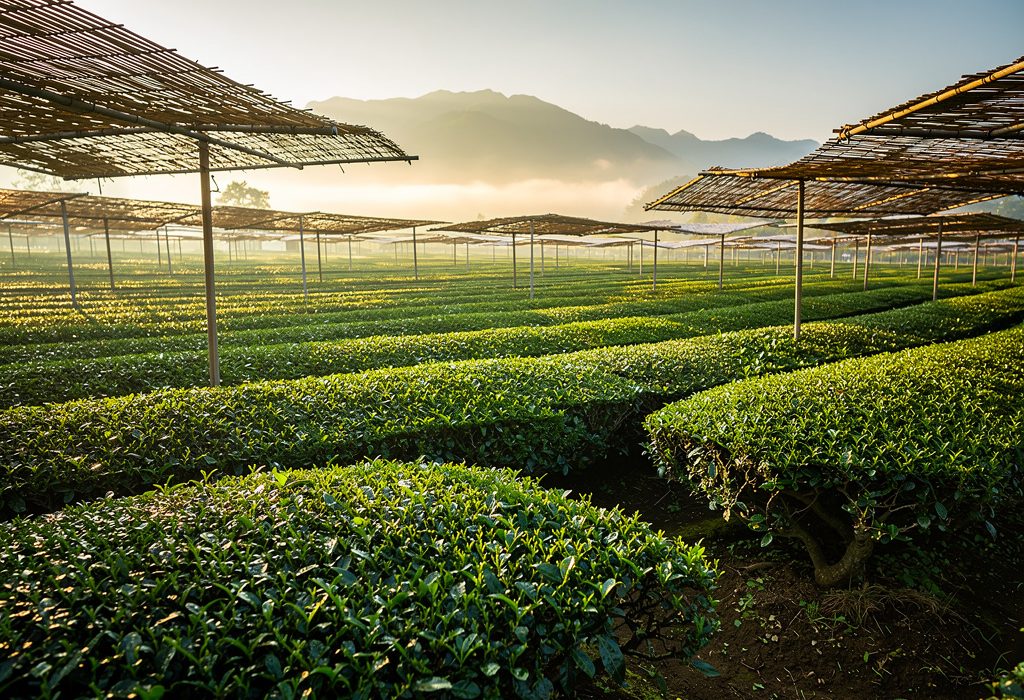
The single most important factor that separates matcha from all other green teas is the shading process, known as kabuse or tana cultivation. Approximately three to four weeks before harvest, farmers cover the tea plants with reed screens or black shade cloth, gradually blocking out up to 90 per cent of sunlight.
This deliberate deprivation triggers a remarkable transformation in the leaves. Starved of direct light, the plants produce dramatically higher levels of chlorophyll (giving matcha its stunning deep-green colour), theanine (the amino acid responsible for matcha’s calm, focused energy and characteristic umami sweetness), and caffeine. Simultaneously, the reduced photosynthesis slows the conversion of theanine into bitter catechins, resulting in a cup that is sweet, smooth, and complex rather than harsh or astringent.
The shading period, its duration, and the materials used vary between farms and regions — each a closely guarded part of a producer’s terroir. Just as the soil, microclimate, and altitude of a French wine region define the character of its grapes, the unique combination of geography and shading technique in Uji or Nishio defines the character of its matcha.
From Leaf to Powder: Harvest, Tencha, and Stone-Grinding
After shading, only the youngest, most tender leaves are hand-picked during the first flush harvest (ichibancha) in early May — these are the leaves destined for ceremonial grade matcha. Once harvested, the leaves are steamed immediately to halt oxidation, then dried and stripped of their stems and veins. The resulting product, called tencha, is the raw material for matcha.
The final step is grinding. Tencha is fed slowly through traditional granite stone mills, producing the impossibly fine, silky powder we know as matcha. These mills rotate at a deliberately slow pace — often producing just 40 grams of matcha per hour — to prevent heat from building up and damaging the delicate aromatic compounds. A single 30-gram tin of premium matcha can represent an entire hour of stone-grinding from a single mill.
This painstaking process is why quality matcha commands a premium price, and why the difference between a mass-produced culinary powder and a single-origin ceremonial matcha from Uji is so profound. Every step — the region, the soil, the shading, the harvest, the grinding — leaves its fingerprint on the final flavour.
Bringing the Best of Japan’s Tea Gardens to Your Cup
Understanding the origins of matcha gives you the knowledge to choose wisely. When you reach for a tin of ceremonial grade matcha from Uji or a vibrant culinary matcha from Nishio, you are connecting with a tradition of craftsmanship that stretches back centuries across some of the world’s most beautiful landscapes.
At true-matcha.com, we source our matcha directly from trusted farms in Japan’s finest growing regions, ensuring that every order reflects the terroir, the tradition, and the care that makes authentic Japanese matcha extraordinary. Explore our range today and taste the difference that origin makes.