
Matcha vs Green Tea: What’s the Real Difference?
At first glance, matcha and green tea seem like close relatives — both are made from the Camellia sinensis plant, both are associated with Japan, and both are celebrated for their health properties. But the differences between them are more significant than most people realise, spanning cultivation, processing, flavour, nutritional content, and the way you prepare and consume them. Here is the complete picture.
The Same Plant, Very Different Journeys
Both matcha and conventional green tea (typically sencha, the most widely consumed variety in Japan) originate from Camellia sinensis, but the paths from plant to cup diverge early — at the cultivation stage itself.
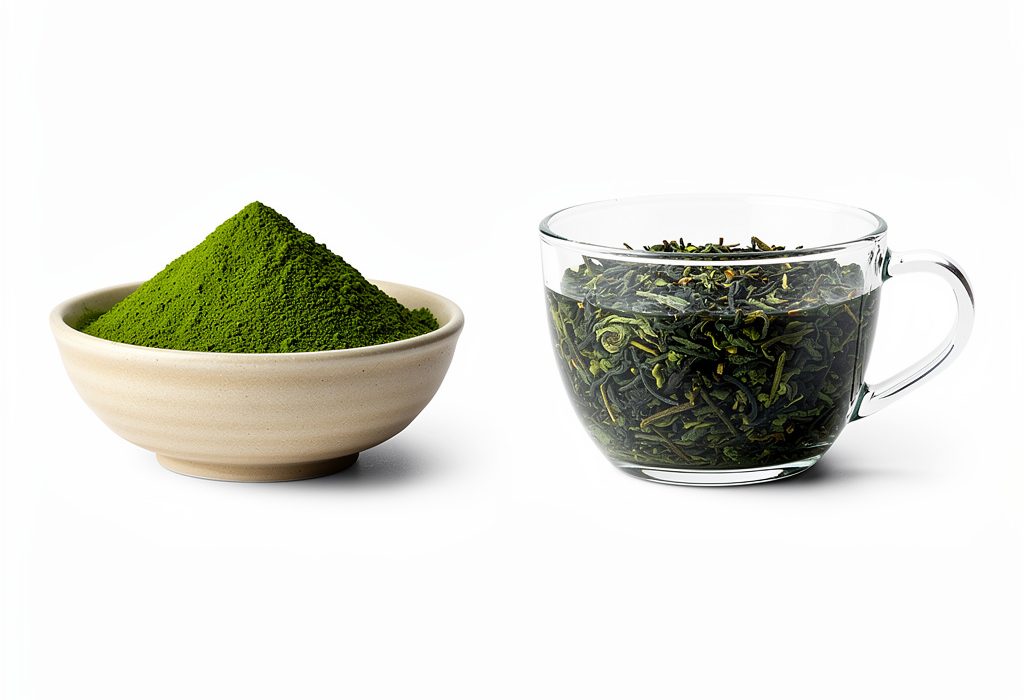
Sencha is grown in full sunlight throughout its growing season. This sun exposure drives photosynthesis at high rates, increasing the production of catechins — the bitter, astringent antioxidant compounds that give green tea much of its character. The leaves are harvested, briefly steamed to halt oxidation (which would turn them into black tea), rolled, and dried. The resulting product is brewed as loose leaf or in bags, and you drink an infusion of the leaf rather than the leaf itself.
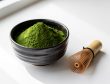
Matcha begins differently. The tea plants destined for matcha production are shaded for 20 to 30 days before harvest, using either bamboo mats, reed screens, or purpose-built shade structures. This deliberate reduction in sunlight triggers a remarkable physiological response in the tea plant: deprived of light, it ramps up chlorophyll production (giving matcha its characteristic vivid green) and diverts energy toward producing L-theanine, the amino acid responsible for the smooth, umami sweetness that defines ceremonial matcha’s flavour. The resulting shade-grown leaves, called tencha, are harvested, steamed, dried, and stripped of stems and veins before being stone-ground into an ultra-fine powder.
How You Consume Them
This is perhaps the most fundamental practical difference. When you brew green tea, you are extracting soluble compounds into water and then discarding the leaf. Depending on water temperature and steeping time, you extract a fraction of the leaf’s nutrients — typically 20 to 30 percent of what the leaf contains.
When you drink matcha, you consume the entire leaf in powdered form. Every catechin, every molecule of L-theanine, every vitamin and mineral that the leaf contains goes directly into your cup and then into your body. This is why matcha’s nutritional density is so dramatically higher than brewed green tea: you are not extracting from the leaf, you are eating it.
Caffeine and L-Theanine: A Meaningful Difference
A standard cup of sencha brewed green tea contains approximately 20–30mg of caffeine. Matcha contains significantly more — a typical serving (1.5–2g of powder) delivers around 60–80mg of caffeine, comparable to a moderate espresso. This difference matters for those monitoring their caffeine intake.
However, the experience of matcha’s caffeine is qualitatively different from both coffee and regular green tea, because of its exceptional L-theanine content. The shading process concentrates L-theanine at levels roughly three to four times higher than in sencha. This amino acid directly modulates caffeine’s effects in the brain — slowing absorption, promoting alpha brain wave activity, and preventing the spike-and-crash pattern associated with coffee. The result is what matcha drinkers consistently describe as clean, sustained alertness without anxiety or jitteriness.
Flavour Profile
Sencha’s flavour is fresh, light, and slightly vegetal — a clean, delicate taste with a gentle astringency. It is enormously versatile and easy to enjoy, though low-quality or over-brewed sencha can turn bitter and harsh.
Ceremonial grade matcha has a fundamentally different character: rich, creamy, and deeply umami, with a natural sweetness that comes from L-theanine rather than added sugar. There is a complex layering of grassy freshness, savoury depth, and a clean, long-lasting finish. High-quality matcha whisked in water alone needs no sweetener — something that surprises many first-time drinkers who have only encountered lower-grade versions.
Nutritional Comparison
On almost every measurable nutritional dimension, matcha outperforms brewed green tea, simply because of the whole-leaf consumption factor. EGCG content per serving: matcha typically delivers 3–4 times the amount found in a cup of sencha. Chlorophyll, which has detoxifying properties and gives matcha its colour: dramatically higher in matcha due to both shading and whole-leaf consumption. L-theanine: 3–4 times higher in matcha. Vitamins A, C, and E: all present in measurable quantities in matcha but largely left behind in spent green tea leaves.
For those drinking tea primarily for health benefits, this comparison is significant. A daily bowl of quality ceremonial grade matcha delivers a substantially more concentrated nutritional payload than an equivalent volume of brewed green tea.
Which Should You Choose?
The honest answer is: ideally, both — they serve different moments beautifully. Sencha is effortless, delicate, and perfect for casual sipping throughout the day. Matcha rewards a moment of intention, whether that is a quiet morning ritual with a bamboo whisk, a creamy midday latte, or a focused afternoon pick-up.
If you are new to matcha and curious to explore the difference first-hand, our ceremonial grade at true-matcha.com is the ideal starting point — stone-ground in Uji, Kyoto, and shipped fresh so the first bowl gives you the full, authentic experience.