Matcha vs Green Tea: What’s the Difference and Which Is Better for You?

Matcha vs Green Tea: What’s the Difference and Which Is Better for You?
If you’ve ever stood in the tea aisle wondering whether to reach for a box of green tea bags or a tin of vibrant matcha powder, you’re not alone. Both come from the same plant — Camellia sinensis — yet they taste radically different, offer distinct nutritional profiles, and suit entirely different moments in your day. Understanding the difference between matcha and green tea isn’t just tea trivia; it can genuinely change how you fuel your body and mind. Let’s break it all down.
How Matcha and Green Tea Are Grown and Processed
The most fundamental difference between matcha and green tea lies in how the leaves are cultivated and prepared. Conventional green tea leaves are grown in open sunlight, harvested, briefly steamed or pan-fired to halt oxidation, and then rolled and dried. The result is a leaf you steep in hot water — you extract the flavour and nutrients, then discard the leaf itself.
Matcha follows a far more deliberate path. For the three to four weeks before harvest, tea farmers shade the plants under bamboo or reed screens, cutting off up to 90% of direct sunlight. This stress triggers the plant to produce more chlorophyll (responsible for matcha’s vivid emerald colour) and significantly higher levels of L-theanine, the amino acid linked to calm, focused mental states. After harvest, the leaves — now called tencha — are steamed, dried, de-stemmed, and stone-ground into an ultra-fine powder. When you prepare matcha, you whisk the entire ground leaf into your liquid. You consume everything, not just an infusion.
This full-leaf consumption is the single biggest reason matcha and green tea differ so dramatically in their effects.
Flavour, Aroma, and Preparation
Brewed green tea ranges from grassy and light to vegetal and slightly bitter depending on the variety — think sencha, gyokuro, or dragonwell. It’s approachable, mild, and endlessly versatile. A standard cup is made by steeping leaves in water at around 70–80°C for one to two minutes.
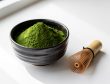
Matcha has a richer, more complex profile: umami-forward, with a natural sweetness underneath and a pleasant, lingering bitterness. Ceremonial grade matcha — the highest quality, made from the youngest leaves — is the purest expression of this flavour. It’s meant to be whisked into a small amount of hot water (around 70–75°C) with a bamboo whisk (chasen) until frothy. Culinary grade matcha is slightly more robust and ideal for lattes, smoothies, baking, and cooking.
Because the preparation methods are so different, the two teas occupy different roles in daily life. A green tea bag is a convenient, gentle companion for any hour. A bowl of matcha — especially prepared in the traditional style — is something closer to a ritual.
Nutrition: How Matcha and Green Tea Compare
Both beverages are packed with polyphenols, particularly catechins — the antioxidants most studied for their potential health benefits. But because you consume the whole leaf with matcha, the concentration is dramatically higher.
Research suggests that matcha contains significantly more EGCG (epigallocatechin gallate) — the most potent green tea catechin — per serving than a standard cup of steeped green tea. Estimates vary, but some studies indicate matcha can deliver anywhere from 3 to 10 times more antioxidants per cup. If you’re drinking matcha for antioxidant support, metabolism, or overall wellness, you’re getting a far more concentrated dose.
L-theanine levels also differ substantially. The shading process that defines quality matcha production boosts L-theanine significantly. This amino acid works synergistically with caffeine — matcha contains roughly 30–70mg of caffeine per serving (compared to 20–30mg in green tea) — creating what many people describe as “calm energy”: alert and focused without the jitters or crash that can accompany coffee.
In terms of vitamins and minerals, matcha edges ahead again: it provides meaningful amounts of vitamin C, vitamin A (as beta-carotene), potassium, iron, and fibre — all from consuming the whole leaf rather than an infused liquid.
Which Should You Choose?
The honest answer is that both belong in a health-conscious lifestyle — they simply serve different purposes. Steeped green tea is an excellent everyday hydrator and a gentle source of antioxidants. It’s easy, affordable, and wonderfully varied in flavour depending on the origin and style you choose.
Best matcha powder, however, is the better choice when you want maximum nutritional impact, a longer-lasting and smoother energy lift, or a mindful morning ritual that sets a deliberate tone for your day. If you’re new to matcha, start with a high-quality ceremonial grade matcha and prepare it simply — just powder and hot water — before experimenting with matcha lattes and recipes. The quality of the leaf matters enormously; a dull, yellowish powder bears no resemblance to the bright, sweet experience that well-sourced matcha delivers.
At true-matcha.com, we source only premium ceremonial and culinary grade matcha from the finest Japanese tea gardens — so whether you’re a first-time drinker or a seasoned enthusiast, you’ll experience matcha exactly as it should taste. Explore our range and discover the difference quality makes.