The Art of Japanese Tea Ceremony: A Complete Guide to Chado and Matcha Ritual

The Art of Japanese Tea Ceremony: A Complete Guide to Chado and Matcha Ritual
For over five centuries, the Japanese tea ceremony has been far more than a simple act of brewing and drinking tea. Known as Chado — “the Way of Tea” — this meditative practice transforms the preparation of ceremonial grade matcha into a profound expression of harmony, respect, purity, and tranquility. Whether you are new to the world of matcha or a devoted enthusiast looking to deepen your appreciation, understanding the traditions of Chado offers an extraordinary window into Japanese culture and the philosophy of mindful living.
What Is Chado? The Philosophy Behind the Tea Ceremony
The Japanese tea ceremony is not merely about drinking tea — it is a choreographed ritual rooted in Zen Buddhist principles. The term Chado (also written as Chanoyu) literally translates to “the Way of Tea,” and its philosophy is built upon four foundational concepts introduced by the legendary tea master Sen no Rikyu in the 16th century:
- Wa (Harmony) — a deep appreciation for the natural world and the environment in which tea is prepared.
- Kei (Respect) — sincere reverence for the host, the guests, and every object used in the ceremony.
- Sei (Purity) — the cleansing of the mind and surroundings before entering the tea space.
- Jaku (Tranquility) — the inner stillness achieved through the practice of Wa, Kei, and Sei.
These principles remind us that brewing premium matcha powder with full attention is itself a form of meditation. Every gesture — from the precise folding of the fukusa cloth to the arc of the bamboo whisk — is deliberate, graceful, and deeply intentional.
The Essential Tools of the Japanese Tea Ceremony
A traditional tea ceremony requires a carefully selected set of tools, each with centuries of craftsmanship behind it. Learning to recognise these instruments enriches any experience with matcha, even when making matcha at home:
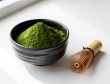
- Chawan (Tea Bowl) — the centrepiece of the ceremony. Handcrafted pottery bowls, often irregular and beautifully imperfect, are prized above factory-made pieces. The shape, glaze, and weight all influence how the matcha is whisked and drunk.
- Chasen (Bamboo Whisk) — hand-carved from a single piece of bamboo into dozens of fine tines, the chasen froths the matcha into a smooth, emerald foam. A quality chasen makes an enormous difference to the texture of your bowl.
- Chashaku (Tea Scoop) — a slender bamboo scoop used to transfer ceremonial grade matcha from its container into the chawan. Two scoops typically yield a standard serving.
- Natsume or Chaire (Tea Caddy) — the lacquered container in which matcha is stored. A natsume is used for thin tea (usucha), while a ceramic chaire is reserved for the richer thick tea (koicha).
- Fukusa (Silk Cloth) — used to ritually cleanse and handle the tea caddy and scoop, its folding and use is a studied art in itself.
- Kama and Furo (Iron Kettle and Brazier) — the cast-iron kettle heats the water to the precise temperature needed to unlock matcha’s layered umami flavour without bitterness.
A Brief History: From Tang Dynasty China to the Japanese Tea Room
The story of matcha begins in Tang Dynasty China, where powdered tea was first compressed into cakes and whisked into hot water. Buddhist monks travelling between China and Japan carried these techniques eastward, and by the 12th century, Zen master Eisai had introduced tea cultivation to Japan — planting seeds in the fertile soils of what would become the famous tea-growing regions of Uji and Nishio.
For centuries, tea was primarily the domain of Buddhist monasteries and the samurai class. It was Sen no Rikyu — serving as tea master to the warlord Toyotomi Hideyoshi — who distilled the practice into the elegant, unassuming aesthetic we know today. He designed the archetypal chashitsu (tea room): a small, humble thatched space where all guests, regardless of rank, had to bow through the low nijiriguchi entrance, equalised before the bowl of tea. This democratic spirit and respect for simplicity — what the Japanese call wabi — became the defining character of the Way of Tea and remains central to the culture of matcha tea ritual to this day.
Embracing Mindfulness Through Matcha: The Living Practice of Chado
You do not need to attend a formal tea school to bring the spirit of Chado into your daily life. The essence of the tea ceremony is simple: give your full, undivided attention to the act of preparing and drinking matcha. When you slow down, measure each scoop deliberately, whisk with care, and hold the warm bowl with both hands before drinking, you are participating in a tradition shared by countless generations before you.
The matcha health benefits are well documented — the L-theanine in matcha promotes calm, sustained alertness, making it the perfect companion for a mindful morning ritual. But the greatest gift of Chado is not physical; it is the practice of being fully present, of finding beauty in simplicity, and of treating an ordinary moment as something worth honouring.
Modern practitioners often adapt the ceremony to their own kitchens and schedules — using a beautiful chawan, a quality chasen, and a tin of premium matcha powder sourced directly from Uji or Kagoshima. The tools may be simpler and the ritual abbreviated, but the intention remains the same.
Begin Your Own Tea Journey with True Matcha
Whether you are drawn to the deep history of Chado, the meditative calm of the matcha morning ritual, or simply the desire to experience how to make matcha at home with the very best ingredients, the foundation is always the same: exceptional quality matcha. At True Matcha, we source and curate only the finest ceremonial and culinary grade matcha from trusted Japanese tea farms, so every bowl you prepare carries the full depth of this extraordinary tradition. Explore our range today and bring a little more harmony, respect, purity, and tranquility into your every day.